
Choosing your first dive computer—or upgrading your current one—is one of the most important gear decisions you’ll make. It’s your primary safety tool, tracking depth, time, and nitrogen loading to keep you within safe limits.
Here is a guide to the key features you should consider when shopping for a dive computer.
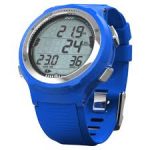
1. Mount Type: Wrist vs. Console
- Wrist-Mount: Worn like a watch or strapped to your forearm. They are compact, easy to read at a glance without fumbling, and ideal to wear even out of the water since you can keep your computer with you.
- Console-Mount: Integrated into your gauge console and connected via a high-pressure hose. These are harder to lose and put all your data—depth, time, and tank pressure—in one place.
2. Dive Modes: Recreational to Technical
- Recreational: Focuses on simplicity and safety for no-decompression diving, typically supporting Air and Nitrox (up to 40% or 50% O2).
- Advanced/Technical: For divers pushing deeper or staying longer, these computers support multiple gas mixes (including Trimix), decompression planning, and even closed-circuit rebreather (CCR) modes.
3. Alerts: Audible vs. Vibrate
- Audible Alerts: Standard beeps for ascent rates or depth limits. However, sound travels differently underwater, making it hard to tell if the beep is yours or your buddy’s. This feature may be available on console or wrist mounted computers.
- Vibration: A newer feature that provides a tactile buzz on your wrist (thus, typically only found on wrist mounted computers). It’s unmistakable and doesn’t disturb the peace of the dive for others.
4. Air Integration
Air integration allows your computer to display your real-time tank pressure and calculate your remaining air-time (or “gas time remaining”) based on your breathing rate (surface air consumption, or “SAC” rate). While Air Integration adds to the cost, it provides a more complete picture of your dive status on a single screen.
- Directly Attached (Hose-Mounted): Some computers are console-styles, designed to screw directly into the high-pressure port of your first stage regulator. These are less common today but offer a compact way to keep a small computer right at the source, without worrying about transmitters and more batteries.
- Hoseless (Transmitter-Based): This is the most modern and popular setup for wrist-mount computers. A small wireless transmitter (or “pod”) screws into your regulator’s high-pressure port and sends your tank data via a wireless signal directly to your wrist. It cleans up your gear profile by removing an extra hose.
5. Digital Compass
Higher-end models often include a digital, tilt-compensated compass. This eliminates the need for a separate analog compass and can be more accurate when you aren’t holding your arm perfectly level.
A digital compass allows you to lock in a heading with the press of a button. Once you point the computer in your desired direction and set the bearing, the screen provides a visual guide (like a digital arrow or “lubber line”) to help you stay on course without having to memorize degrees.
The most helpful feature for most divers is the reciprocal heading. When it’s time to head back to the boat or the shore, the computer automatically calculates the 180-degree opposite of your original path. No math!
6. Battery Type: Replaceable vs. Rechargeable
- User-Replaceable: Uses standard watch-style batteries (like CR2450) that you can swap yourself. This is great for remote trips where charging isn’t an option.
- Rechargeable: More eco-friendly and convenient for regular use, often charging via USB or a wireless dock.
7. Display
- Non-Color LCD: These are energy-efficient and highly readable in bright sunlight but often require a backlight for night or deep dives.
- Color (LED/AMOLED): Offers high-contrast, vivid colors that make critical information pop, even in murky water. They are much easier to read but typically have shorter battery life per charge.
- Screen Size: Consider the size of the screen and its readability given your particular vision needs. Larger “full-sized” units are designed specifically for diving and prioritizing maximum visibility. Watch-style computers are compact enough to double as a daily timepiece, as many do.
