
+
Choosing Your Perfect Dive ComputerChoosing your first dive computer—or upgrading your current one—is one of the most important gear decisions you’ll make. It’s your primary safety tool, tracking depth, time, and nitrogen loading to keep you within safe limits.
Here is a guide to the key features you should consider when shopping for a dive computer.
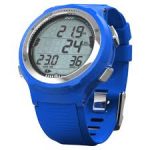
1. Mount Type: Wrist vs. Console
- Wrist-Mount: Worn like a watch or strapped to your forearm. They are compact, easy to read at a glance without fumbling, and ideal to wear even out of the water since you can keep your computer with you.
- Console-Mount: Integrated into your gauge console and connected via a high-pressure hose. These are harder to lose and put all your data—depth, time, and tank pressure—in one place.
2. Dive Modes: Recreational to Technical
- Recreational: Focuses on simplicity and safety for no-decompression diving, typically supporting Air and Nitrox (up to 40% or 50% O2).
- Advanced/Technical: For divers pushing deeper or staying longer, these computers support multiple gas mixes (including Trimix), decompression planning, and even closed-circuit rebreather (CCR) modes.
3. Alerts: Audible vs. Vibrate
- Audible Alerts: Standard beeps for ascent rates or depth limits. However, sound travels differently underwater, making it hard to tell if the beep is yours or your buddy’s. This feature may be available on console or wrist mounted computers.
- Vibration: A newer feature that provides a tactile buzz on your wrist (thus, typically only found on wrist mounted computers). It’s unmistakable and doesn’t disturb the peace of the dive for others.
4. Air Integration
Air integration allows your computer to display your real-time tank pressure and calculate your remaining air-time (or “gas time remaining”) based on your breathing rate (surface air consumption, or “SAC” rate). While Air Integration adds to the cost, it provides a more complete picture of your dive status on a single screen.
- Directly Attached (Hose-Mounted): Some computers are console-styles, designed to screw directly into the high-pressure port of your first stage regulator. These are less common today but offer a compact way to keep a small computer right at the source, without worrying about transmitters and more batteries.
- Hoseless (Transmitter-Based): This is the most modern and popular setup for wrist-mount computers. A small wireless transmitter (or “pod”) screws into your regulator’s high-pressure port and sends your tank data via a wireless signal directly to your wrist. It cleans up your gear profile by removing an extra hose.
5. Digital Compass
Higher-end models often include a digital, tilt-compensated compass. This eliminates the need for a separate analog compass and can be more accurate when you aren’t holding your arm perfectly level.
A digital compass allows you to lock in a heading with the press of a button. Once you point the computer in your desired direction and set the bearing, the screen provides a visual guide (like a digital arrow or “lubber line”) to help you stay on course without having to memorize degrees.
The most helpful feature for most divers is the reciprocal heading. When it’s time to head back to the boat or the shore, the computer automatically calculates the 180-degree opposite of your original path. No math!
6. Battery Type: Replaceable vs. Rechargeable
- User-Replaceable: Uses standard watch-style batteries (like CR2450) that you can swap yourself. This is great for remote trips where charging isn’t an option.
- Rechargeable: More eco-friendly and convenient for regular use, often charging via USB or a wireless dock.
7. Display
- Non-Color LCD: These are energy-efficient and highly readable in bright sunlight but often require a backlight for night or deep dives.
- Color (LED/AMOLED): Offers high-contrast, vivid colors that make critical information pop, even in murky water. They are much easier to read but typically have shorter battery life per charge.
- Screen Size: Consider the size of the screen and its readability given your particular vision needs. Larger “full-sized” units are designed specifically for diving and prioritizing maximum visibility. Watch-style computers are compact enough to double as a daily timepiece, as many do.
+
Reef Safe Sunscreens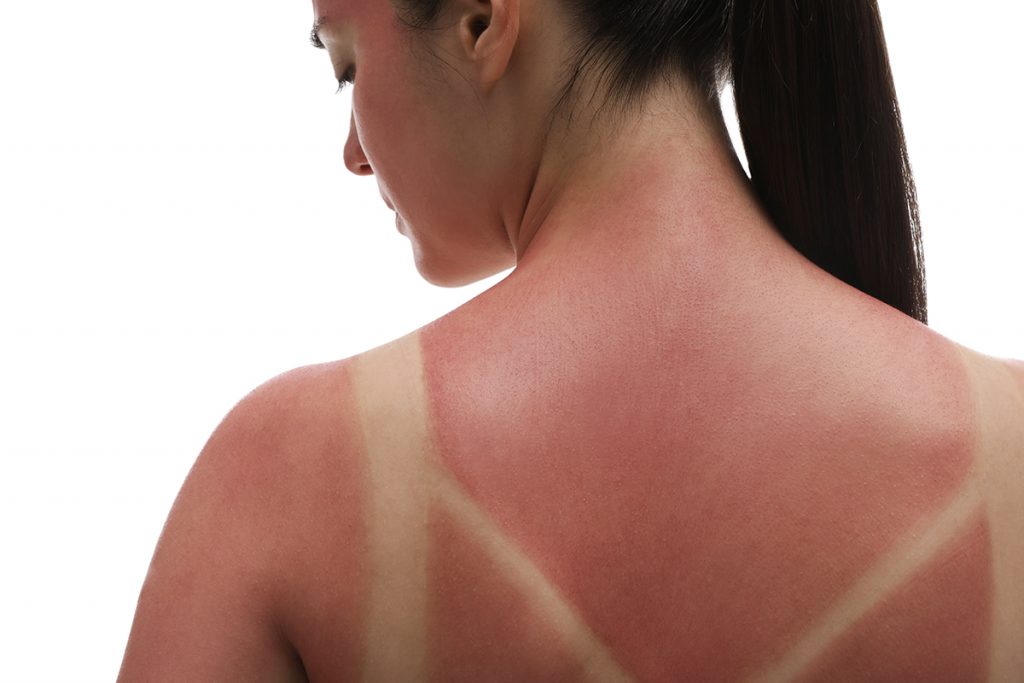
Protect Your Skin and the Reefs We Love
Protecting Yourself
Do you know what the number one dive-related injury is?
You can probably guess from the image above, Yep, it’s sunburn!
Protecting your skin isn’t just about avoiding a painful burn; it’s a vital part of your long-term health as an outdoor enthusiast. Regular use of broad-spectrum sunscreen significantly reduces your risk of skin cancer and melanoma, while also preventing premature aging and permanent skin damage like “photoaging”.
For divers, healthy skin is also practical: sunburned skin dehydrates you faster—increasing the risk of decompression sickness—and makes the friction of a wetsuit nearly unbearable!
Protecting the Environment
While protecting your skin is a top priority, the choice of protection matters just as much as the application. As we scuba divers frequently visit fragile tropical ecosystems, we are the frontline stewards of the environment; this means we must ensure that our defense against the sun doesn’t become a threat to the ocean.
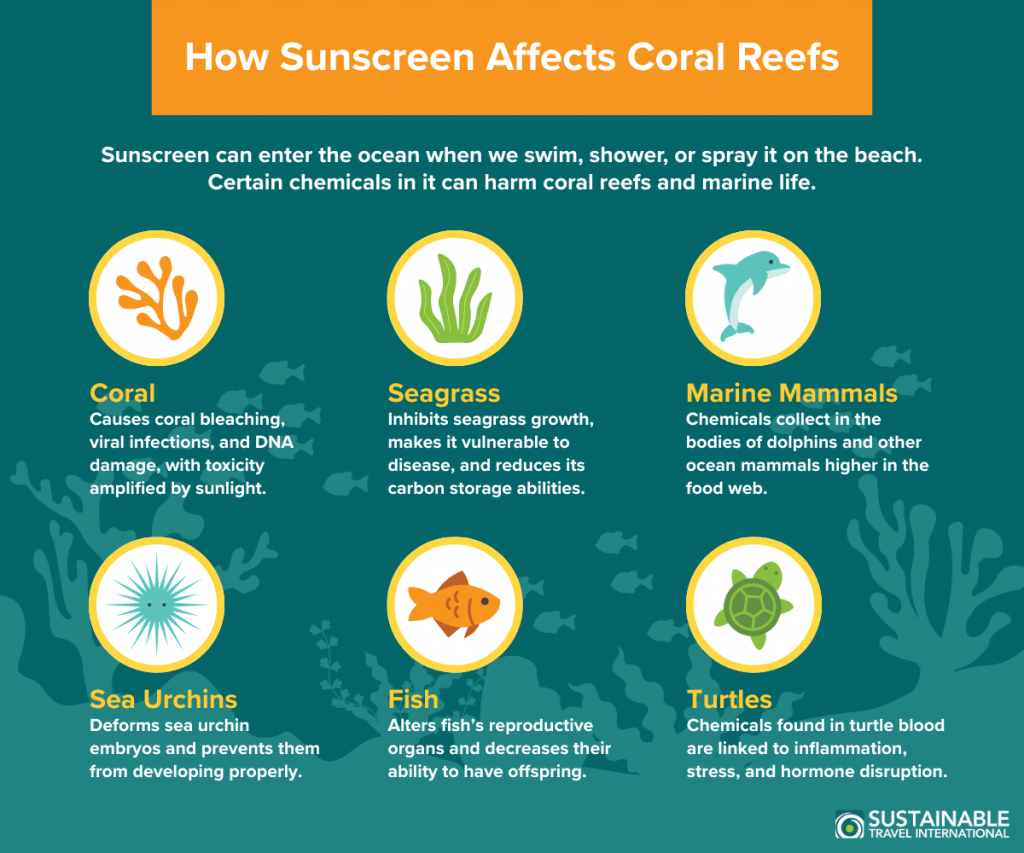
The sunscreens we typically use contain chemicals that can be devastating to marine life. When these ingredients wash off in the water, they contribute to coral bleaching, DNA damage, and reproductive issues in reef systems.
By switching to reef-safe sunscreen, you can guard your health while preserving the vibrant coral systems that make every dive possible, ensuring the underwater world remains vibrant for years to come.
And in many tropical destinations, choosing the right sunblock is no longer just a suggestion—it is often the law.
The Problem with Traditional Sunscreen
Most standard sunscreens rely on chemical filters to absorb UV rays. While effective for human skin, two specific ingredients are primary culprits in reef degradation:
- Oxybenzone
- Octinoxate
Even in tiny concentrations, these chemicals stress coral colonies. They make reefs more susceptible to bleaching—a process where coral loses its vital algae and turns white—and can even kill young coral before it has a chance to grow.
How to Identify Reef-Safe Products
The term “reef-safe” is not strictly regulated, so you must check the ingredient label yourself. Look for “Mineral” or “Physical” sunscreens.
- Active Ingredients: Look for Non-nano Zinc Oxide or Titanium Dioxide.
- The “Nano” Factor: Ensure the minerals are “non-nano,” meaning the particles are large enough that they won’t be ingested by coral.
- Avoid “Aerosols”: Sprays often land on the sand, which eventually washes into the ocean. Lotions are a cleaner choice.
Best Practices for Application
Using mineral sunscreen requires a slightly different approach than chemical versions:
- Apply Early: Put it on 15–20 minutes before hitting the water.
- A Little Goes a Long Way: Mineral creams are thicker; rub them in well to reduce the white cast.
- Cover Up: The best reef-safe “sunscreen” is clothing. Use UPF-rated rash guards, hats, and leggings to reduce the amount of lotion you need to apply
Our Recommendations
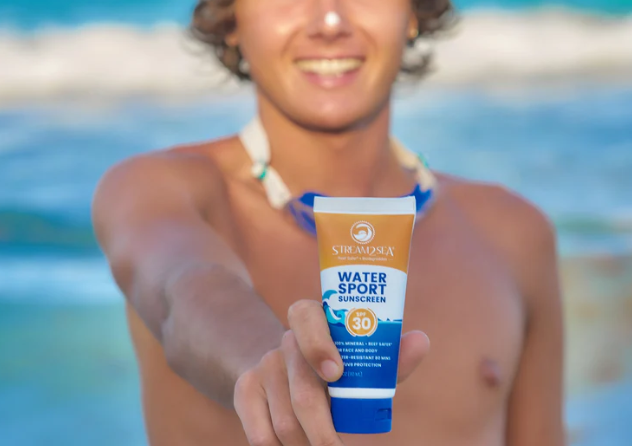
Ski/Scuba Center is proud to carry a full line of Stream2Sea products to help you dive responsibly.
Founded by a cosmetic chemist and fellow scuba diver, Stream2Sea offers the only mineral-based sunscreens on the planet scientifically proven and tested safe for freshwater fish, saltwater fish, and coral larvae. Their high-performance formulas are biodegradable in both salt and fresh water, ensuring that your skin stays protected without leaving a toxic trace in the reefs we love.
Don’t let a preventable burn ruin your time underwater. Stop by Ski/Scuba Center today to pick up your Stream2Sea essentials and chat with our team about how to stay protected.
Let’s work together to keep your skin healthy and our oceans thriving—one dive at a time.
FAQ
+
How long does it take to get SCUBA certified? What’s the process?
To obtain the first level of entry certification, called “Open Water Diver”, there are several training parts, requiring different times. In total, getting your Open Water Diver certification takes 22-32 hours:
Pre-Class Online Review. This takes about 4 hours, which you do at your own pace. Upon making a deposit, you will receive an email with a link to your digital training program.
In-Person Classroom + Confined Water (Pool) Training. Classroom sessions and pool sessions are combined for a total of 6 sections. These are typically combined across several weekday evenings (6 evenings at 3 hours per evening), or one full weekend (all day Saturday and Sunday). The classroom and pool training together takes a total of about 18 hours.
Open Water Sessions (aka “Check-Out Dives). There are 4 open water dives across two days. Each day is about 4 hours (8 hours total). These are typically held at one of the local quarries, taking place on a Saturday and Sunday.
To get stared, setup your FREE account by clicking here, then call us a 865-523-9177 to register.
+
Even in a pool, if I go very deep, the pressure huts my ears. How could I possibly SCUBA dive?Correct, water pressure can be extreme, and the eardrum is the most sensitive and obvious indicator of that pressure. But actually, that ear pain is easily countered using a variety of proven equalization techniques. These techniques are one of the key parts of all SCUBA training programs. Once you learn these equalization techniques, you’d be amazed at how you are able to dive to depths of 60+ feet with no ear pain whatsoever.
Click here to learn more about ear equalization techniques.
+
Aren’t I at risk of getting the “bends”?The “bends” is actually a condition medically referred to as “Decompression Sickness” or DCS, and there are several sub-classifications of this condition. This occurs when gas dissolved in blood comes out of solution and causes small or micro bubbles in the blood stream. This can lead to joint rashes or joint pain, and in very severe situations, breathing difficulties or death if pulmonary air embolisms are formed.
DCS has been studied extensively and is relatively rare in SCUBA diving as it can be nearly completely prevented and easily managed. Of course, the techniques and procedures to limit exposure to DCS is a significant portion of the training that divers learn during their certification classes. Through proper training and the use of dive tables or, most commonly today, dive computers, the risks of “getting bend” are nearly eliminated.
A recent study estimates that the overall incidence of DCS is 3.1 cases per 100,000 dives (Dunford RG, Denoble PD, Forbes R, Pieper CF, Howle LE, Vann RD. A Study of Decompression Sickness Using Recorded Depth-Time Profiles. Undersea Hyperb Med. 2020;47(1): 85-100).
While SCUBA diving is a relatively low-risk activity, there are associated risks. What this video for more details:
+
What are the physical requirements to get my SCUBA certification?A: First and foremost, you should be comfortable in the water. While there is no strict fitness requirement, a certain level of physical fitness is generally advantageous. Prospective divers should be in good health and able to handle the physical demands of diving, which may include managing equipment and swimming in different conditions.
You will be required to complete a medical questionnaire before beginning training. If you answer “yes” to certain health conditions (e.g., heart problems, asthma, epilepsy, etc.), you may need to undergo a medical evaluation by a physician.
Upon first getting in the water for the training session, you will be required to complete a 10-minute float/swim without swim aids and a 200 yard/meter continuous surface swim without aids.
Also, SCUBA equipment can be rather heavy. Once fully geared up, a diver may have around 40-50 pounds (18-23 KG) to carry into the water. However, once underwater, the buoyancy of the water helps to offset much of this weight, making diving more manageable.
+
How deep can you go?A: The recreational dive limit for an Open Water Diver is 60 feet (18 meters). With optional advanced training, recreational dive limits are as deep as 130 feet (39 meters). Certainly, you may have heard of people diving much deeper. And while this is true, this requires additional professional or commercial training beyond recreational limits, special gas mixtures, and decompression.
Although these limits do exist, some of the most popular diving is shallower than 40 feet (12m), where the water’s warmer and the colors are brighter.
+
How long can you stay under water?A: This is a very common question, and the short answer is, it depends. In summary, the deeper you dive, the less time you can stay under water. The exact time limits depend on your tank size, gas mixture, and depth. Ultimately, this is a significant part of the training program so you fully understand the limitations.
Your dive gear includes an air pressure gauge that indicates how much air you have left in your tank. In the unlikely event that you run low or out of air, your dive buddy has an extra regulator (mouthpiece) that allows you to share a single air supply while swimming to the surface. There are a number of other options you’ll learn in your scuba diving training.
+
How old do you have to be to get scuba certified?The minimum age for full Open Water scuba certification is 15 years old. However, junior programs are available. A child who is 10 years or older may become a Junior Open Water diver, allowing him or her to dive with an authorized adult Open Water Diver as deep as 40 feet (12m). Once a Junior Open Water Diver turns 15, he or she need only complete an update course to gain their full Open Water Diver certification.
+
Are there special concerns for women who scuba dive?A: Women who are pregnant should not dive. The physiological changes during pregnancy can affect the ability to dive safely, and there are potential risks to both the mother and fetus associated with SCUBA diving.
Menstruation is typically not a concern. There is no contraindication for diving during menstruation, but women should ensure they are comfortable and prepared.
The SCUBA diving community has historically been male-dominated, but this has changed significantly in recent years. Abot 40% of all divers in the US are women, and Ski/Scuba Center experiences about a 50% rate. Furthermore, SCUBA equipment manufacturers now offer certain items such as wetsuits and buoyancy compensators specifically designed to fit women.
+
What if I feel claustrophobic?This is a common concern. A major factor in the claustrophobic feeling is narrowed vision from the mask, giving a “closed-in” feeling. However, modern scuba masks are available in clear models, with translucent skirts and some even with side-view windows. During your scuba diving training, our instructors give you plenty of time and coaching to become comfortable with each stage of learning, working at your own pace to ensure you master each skill necessary.
+
Isn’t SCUBA diving dangerous?As with any adventure sport, there are inherent risks, after all, humans are not made to swim underwater. That said, SCUBA diving is considered very safe and secure. The most significant part of the SCUBA training and certification is learning how to dive safely and avoid injuries.
Divers Alert Network (DAN) collects data and publishes an annual report on diving fatalities, injuries and incidents. In their most recently published report (2019, for 2017 data), they recorded 128 dive fatalities and 2,069 dive-related injuries worldwide (Denoble PJ (editor). DAN Annual Diving Report 2019 Edition – A report on 2017 diving fatalities, injuries, and incidents. Durham, NC: Divers Alert Network, 2019). The actual number of dives is not specifically tracked (as there is no global centralized logging), but fatality rates are estimated to be 16.4 deaths per 100,000 persons per year in the US. Statistically, diving is safer than driving, giving birth, skydiving, or running a marathon.
Also, watch the following video about the risks associated with SCUBA diving:
+
What about sharks and other dangerous sea life?A: This, of course, is one of the most common questions and concerns from potential new divers. The short answer is that unprovoked shark attacks on scuba divers are extremely rare – sharks are not the mindless killing machines that is often portrayed. Simply put, humans are not considered a food source of sharks, and, when encountered, are more curious than aggressive. The same is true of sting rays, eels, lion fish, and so on. According to The International Shark Attack File (ISAF), there were 129 different types of incidents involving sharks in 2020 worldwide, only 4% involved scuba divers.
As in any natural environment, we humans are encroaching into the world of the habitat wild animals. This is true of surfing, swimming, hiking, biking, skiing, etc. As intruders in their world, we must respect the wildlife and follow the basic tenant of “look but do not touch”.
+
Do I have to travel to complete my certification?No, travel to a far-away destination is not required; you can complete your training locally. Most students choose to conduct their open water dives with Ski/Scuba Center which are typically conducted at a local quarry. The quarrys are about a 40-60 minute drive from downtown Knoxville. There is an option to travel to a far-away destination to complete your Open Water dives with any number of SSI affiliated dive operations – this is referred to as a “Referral”.
+
How much does certification cost?A: The cost of the class is $595* (as of 2026). A deposit of $100* is required at the time you make your class reservation which also gives you instant access to the pre-class digital materials. By the time we get to the Open Water Training dives at the quarry, you will be required to have your own mask, snorkel, fins, and boots. We have several packages available starting from $145*. Throughout the training, we provide you with all other equipment needed (e.g., tanks, weights, regulators, buoyancy compensators, wetsuits, etc.).
If you choose to conduct your Open Water Dives (“check-out dives”) with us at the quarry – as most do – there is an entrance fee of $20-25* per day (depending on the quarry).
+
What equipment do I need for scuba training?A: You will need a swimsuit and a towel for the pool sessions. We will provide all equipment for your classroom and pool training – this is for both Try Scuba and Open Water.
By the time we get to the Open Water Training dives, you will be required to have your own mask, snorkel, fins, and boots. We have several packages available starting from $145*. We will continue to provide all remaining equipment (tanks, weights, BC, regulator, wetsuit, etc.) for the Open Water Dives, which is included in your class tuition.
+
Do I need to own my own equipment once I start to travel?A: Most dive operators around the world require that you have your own mask, fins and snorkel. They typically have rental gear (BC, regulator, dive computers, wetsuits, etc.) available upon arrival. Renting, of course, can be very economical and eliminates the need to travel with your own gear. Most people who continue with their SCUBA passion eventually purchase their own gear for the sake of comfort, fit, familiarity, and sanitation.
The typical scuba kit includes:
- Dive Mask
- Fins (flippers)
- Booties
- Snorkel
- Regulator Set (includes primary and two secondary stages, inflation hose, and pressure gauge)
- Buoyancy Compensator Device (BCD)
- Dive Computer
- Wetsuit or Dive Skin (depending on the water temperature)
Like many sports, hobbies and activities, there are a plethora of SCUBA diving accessories and gadgets – the list can be endless. The Ski/Scuba Center staff will be pleased to assist you in selecting your primary gear as well as any accessories.
+
What is Try Scuba and how is different from Open Water?A: Try Scuba is an economical ($80* normally, but we have a special now for $40*) and low-time commitment option to, well… try scuba. If you want to try scuba diving to see if you enjoy it, this is a perfect first choice. You will be introduced to the underwater world and scuba dive in shallow confined water (i.e., a pool). Open Water Diver is the most common first-level of full scuba certification, that allows you to dive nearly anywhere in the world without additional training.
If you take Try Scuba, and then decide to continue to the full Open Water certification, your cost of the Try Scuba class would be applied towards the cost of the Open Water classes.
Click here to learn more about the different certifications offered.
+
How often do I need to get re-certified?Never. Once you earn your Open Water Diver certification, it is valid for life. That said, if it has been some time since you last dove, a refresher course is available. This is generally optional; however, some dive operators do require a refresher course to dive with them if it has been more that 1 year since your last dive.
Ski/Scuba Center offers the scuba Skills Update (refresher) course each month for a cost of $125* and it lasts about 4 hours (classroom and pool).
+
What is SSI, PADI, NAUI? And how are they different? Why are there several different organizations?A: SSI, PADI and NAUI are just a few of the various SCUBA Diving Certifying and training agencies around the world. In the US, about 98% of all retail stores are affiliated with one of these three entities.
Ski/Scuba Center is an SSI full-service SSI (Scuba Schools International) member training center as well as an Authorized PADI (Professional Association of Diving Instructors) instruction center; both are international organizations. NAUI stands for National Association of Underwater Instructors. Basically, they are all very similar, with minor differences in teaching philosophies and testing methods. Any of these organizations will provide a quality SCUBA training and certification, recognized equally worldwide. The key factor is the quality, convenience, class size, and character of your training shop and instructors.
When SCUBA diving first became prevalent in the 1970’s, the US government, as well as other governments, were on the brink of making SCUBA training programs federally mandated and controlled. Instead, several organizations “stepped-up” and created their own training programs. These are all now private organizations that operate independently of government control. More recently, the International Standards Organization (ISO) has created standards for recreational diver training, with external auditors to examine applicants for an ISO accreditation and standardization. The two organizations with which Ski/Scuba Center is affiliate are (SSI and PADI) are ISO Certified.
These entities generally all have reciprocity with each other. Meaning, if you receive your certification through SSI, that certification will typically be recognized and accepted by operators and resorts worldwide, even if they are affiliated with another agency (e.g., PADI, NAUI).
+
If I get certified by you with SSI training, can I dive other places that are not SSI facilities?Yes. Generally, all the SCUBA training organizations (SSI, PADI, NAUI) have reciprocity and recognize the certifications between each other. In other words, if you are SSI Certified through Ski/Scuba Center, you can go to a dive operator anywhere in the world that is, say, a PADI Center, and they will accept your SSI Certification.
+
If I have a medical condition, such as asthma or diabetes, can I scuba dive?It really depends on the condition and its severity. Certain medical condition can preclude scuba diving.
Please refer to medical questionnaire here.
If you answer “YES” to any of these questions, then you must be evaluated by a physician who must approve you to dive, prior to any in-water diving activities.
+
I can find equipment less expense online. What advantages are there by buying my equipment from the Ski/Scuba Center store?A: Scuba equipment manufacturers often dictate the selling price, but those are more often recommendations. Therefore, many online sites often sell equipment below the manufactures’ retail pricing. Even so, the pricing between in-store and online is typically a small difference. Ski/Scuba Center recognizes that your scuba gear is a significant investment. So purchasing your scuba and snorkel gear from Ski/Scuba Center offers several distinct advantages:
- Fit and comfort are about the most important factors when selecting your gear. By purchasing locally, you are able to try on the gear, whether a mask, BCD, wetsuit, or fins, and rest assured that you are getting the fit for you, and ensure that it is comfortable. In particular, Ski/Scuba carries gear that is specifically designed to fit women. Our expert staff is happy to help.
- The knowledgeable staff will help you select the equipment with the best and necessary features for your particular needs, whether it be related to water temperature (tropical versus cold water), durability, entry point, diving style (recreational versus technical), and so on.
- Try it out! Ski/Scuba Center is not only local, but unique in that there is a pool on site. So, if you want to try out that regulator, bring your bathing suit, hop in the pool, and try it out for yourself.
- Scuba gear, while durable, can be delicately fine-tuned. As such, several components should undergo regular preventative maintenance. When purchased from Ski/Scuba Center, your gear is covered under warranty should something go wrong, and significant maintenance discounts are extended. For example, a regulator annual tune-up, when purchased from Ski/Scuba Center costs $90* (parts included); otherwise, the cost is $150* plus parts.
+
Can I fly on an airplane after diving?No, you should not fly or travel to high altitudes immediately after diving. This includes driving up mountains, visiting volcano lookouts, hiking, or zip-lining above 1,000 feet (300 meters). The drop in atmospheric pressure at high altitudes can cause residual nitrogen in your body to form dangerous bubbles, leading to Decompression Sickness (DCS).
According to DAN (Divers Alert Network), you must wait at least 12 hours after a single dive and 18 to 24 hours after multiple dives before heading up a mountain or catching a flight.
+
Once I have achieved my Open Water Certification, what classes can I take next?Congratulations on earning your Open Water Diver certification! In the Scuba Schools International (SSI) pathway, your training transitions from basic survival skills to exploring new environments and refining your capabilities. Unlike structural “lock-step” systems, SSI gives you the freedom to choose your own path based on your interests, with three highly recommended milestones next:
1. Enriched Air Nitrox (Highly Recommended First Step)
The SSI Enriched Air Nitrox specialty is the most popular class to take immediately after Open Water.
- What you learn: You will learn how to safely breathe and manage oxygen-enriched gas mixtures (up to 40% oxygen).
- The benefit: Nitrox gives you more “no-decompression time” underwater. This means you can stay at the bottom longer, enjoy shorter surface intervals, and feel less fatigued on multi-dive days.
- Convenience: This is a non-diving, academic-focused specialty that can easily be completed in a single afternoon or alongside other practical training.
2. Advanced Open Water Diver
In the SSI system, Advanced Open Water is a highly respected milestone. To earn this qualification, you must sample a variety of specialized skills:
-
- The Structure: You will complete introductory training dives for five different SSI Specialties. Under updated standards, the Deep Diving and Underwater Navigation modules are mandatory foundations, while you choose the remaining three (such as Perfect Buoyancy, Night Diving, or Wreck Diving).
- The Goal: This program builds your confidence under direct supervision and extends your maximum depth limit to 30 meters (100 feet), unlocking access to incredible deeper marine life and historic shipwrecks.
3. Diver Stress & Rescue
Many experienced divers consider Diver Stress & Rescue to be the most rewarding and transformative class in recreational diving.
- What you learn: You will transition your awareness from yourself to your surroundings. You will learn to recognize early signs of anxiety or stress in your dive buddy, manage equipment malfunctions out of the water, and execute real-world rescue scenarios.
- The benefit: It fundamentally changes how you look at safety, building unparalleled confidence in your own self-rescue capabilities and making you the best possible dive buddy.
The Path to Recognition
As you complete these specialties and log more water time, SSI automatically awards you higher, free recognition cards through the MySSI App:
- Specialty Diver: Earned after completing 2 specialty programs and logging 12 dives.
- Advanced Specialty Diver: Earned after completing 4 specialties and logging 24 dives.
- Master Diver: The pinnacle of recreational diving, awarded once you have completed 4 specialties, the Stress & Rescue program, and logged 50 dives.
Still have questions? Please contact us by phone (865-523-9177) or email (dive@skiscuba.com) and one of our dive specialists will be more than happy to discuss your questions, concerns, and options.
*Disclaimer:
The prices listed on this website are subject to change without prior notice. While we strive to provide accurate and up-to-date information, fluctuations in pricing may occur due to various factors including, but not limited to, market conditions, changes in supplier costs, and inventory availability. We recommend that customers verify prices at the time of enrollment for a class.
Thank you for your understanding.
